Bewitching Witch-Hazels: Colors Galore at Arboretum Kalmthout
Kalmthout Arboretum, not far from Antwerp, is home to one of the largest collections of Witch Hazels in the world.
From early January to the end of February, when they are in full bloom, walk the “Hamamelis Route” and discover the many specimens grown here at their best.

Hamamelis Intermedia is a hybrid between the Japanese (Japonica) and the Chinese (Mollis) Witch-Hazels. Pictured above is Westersede, with light yellow flowers.
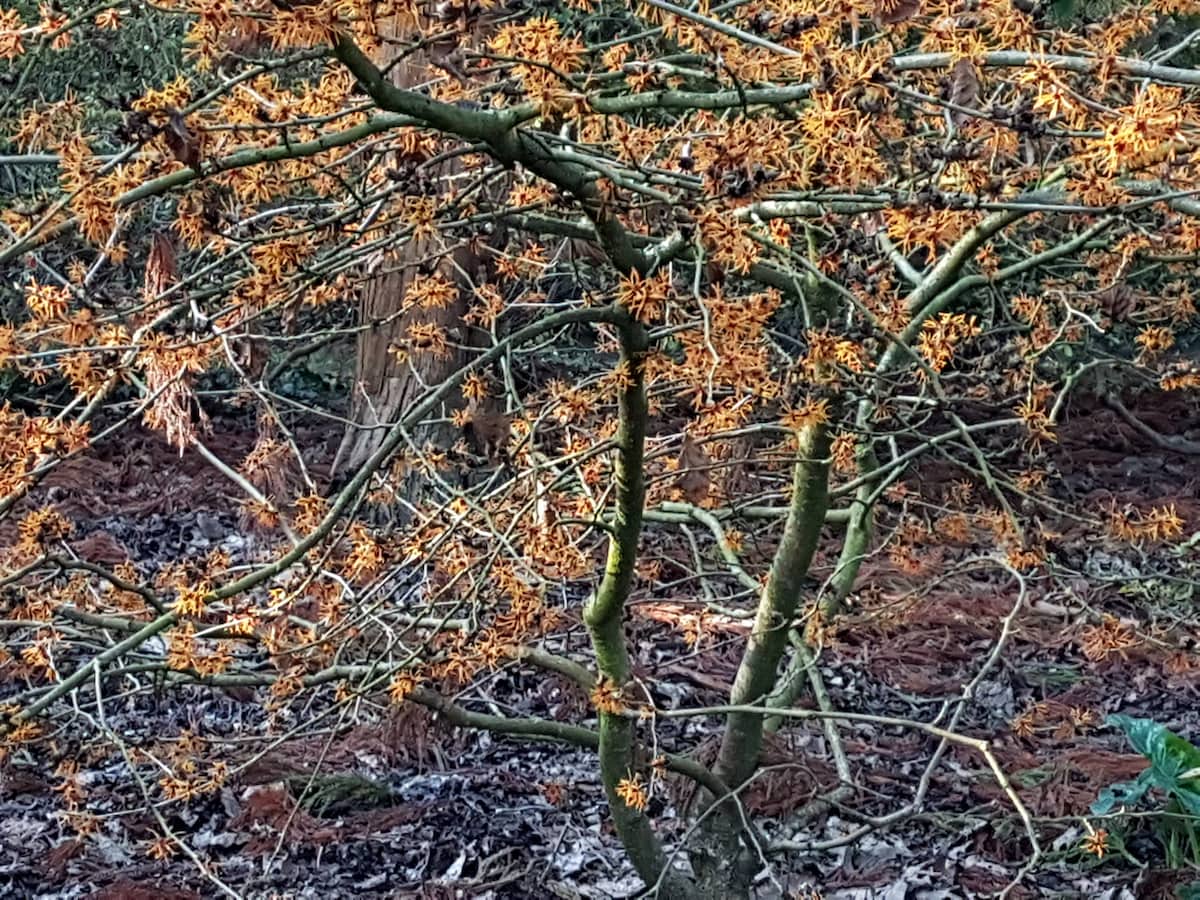
Colors range from light yellow to dark red with all variations in between. Aphrodite , pictured above, flowers a coppery orange.
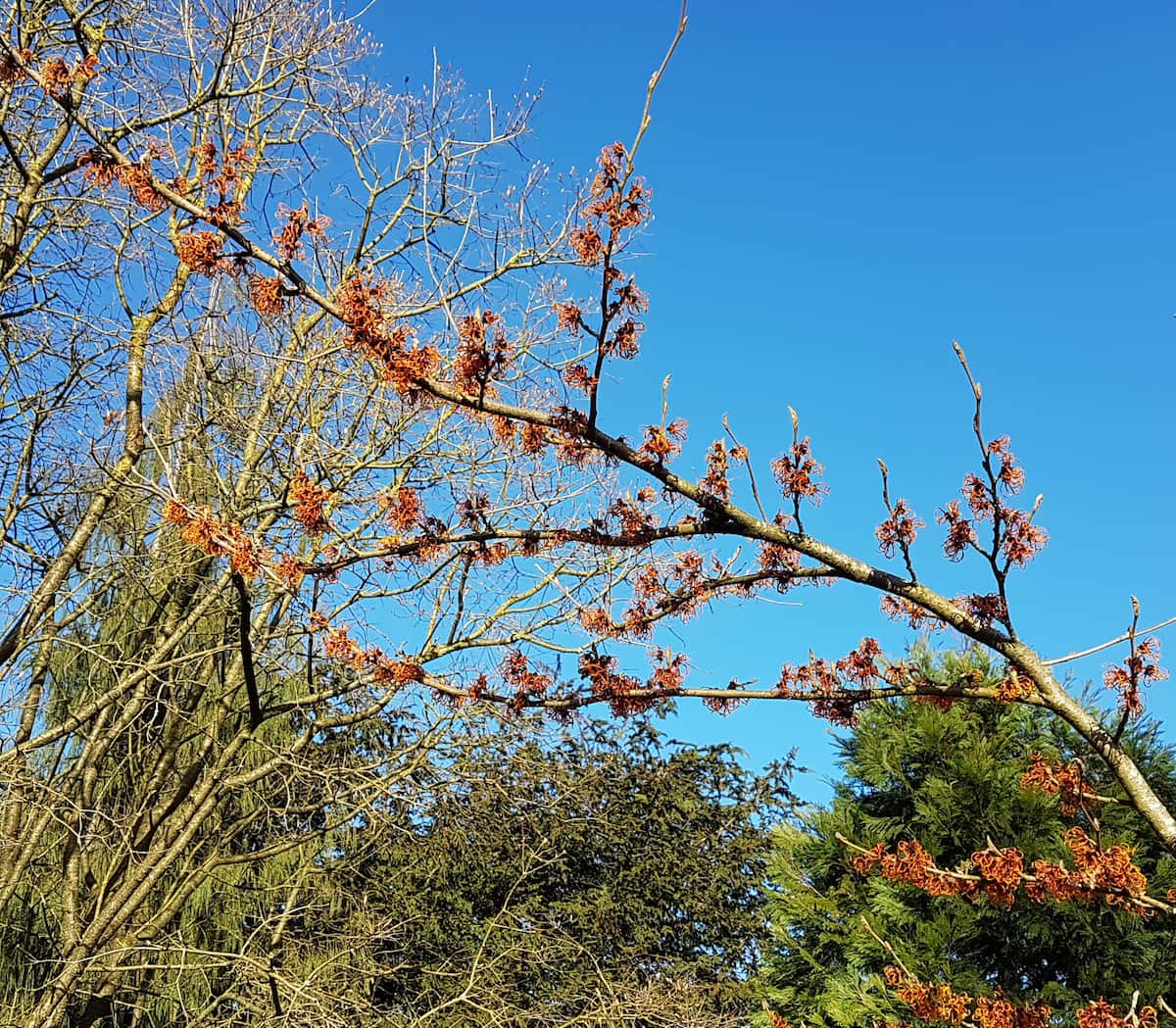
This Hamamelis Intermedia is aptly named Spanish Spider. The shape of the flower resembles spiders’ legs whilst its color evokes the heat of southern Europe
Hamamelis Vernalis is the American species native to the Ozarks and flowers in late winter, as opposed to Virginiana which flowers in the fall. Pictured here is the cultivar “Sandra” with copper colored flowers. When I visited I couldn’t smell its fragrance though this was perhaps due to the fact that it was the middle of the day.

Witch-Hazels display a naturally graceful habit and do not need to be pruned. This low-growing cultivar Japonica Obtusata (pictured above) caught my eye. Note the contrast with the specimen in the background.

What's in a name?
“Hamamelis”, from ancient Greek, means “flower and fruit” and refers to the fact that the shrub blooms while the fruit formed the previous season has not yet dropped. When ripe the fruit explodes, projecting the two seeds it contains up to 30 feet away. Hence the common name “snapping hazel” in reference to the sound of the fruit exploding. Other common names are Winter Bloom and Striped Alder. In French Hamamelis is also called “Devil’s Coffee”. (Café du Diable).
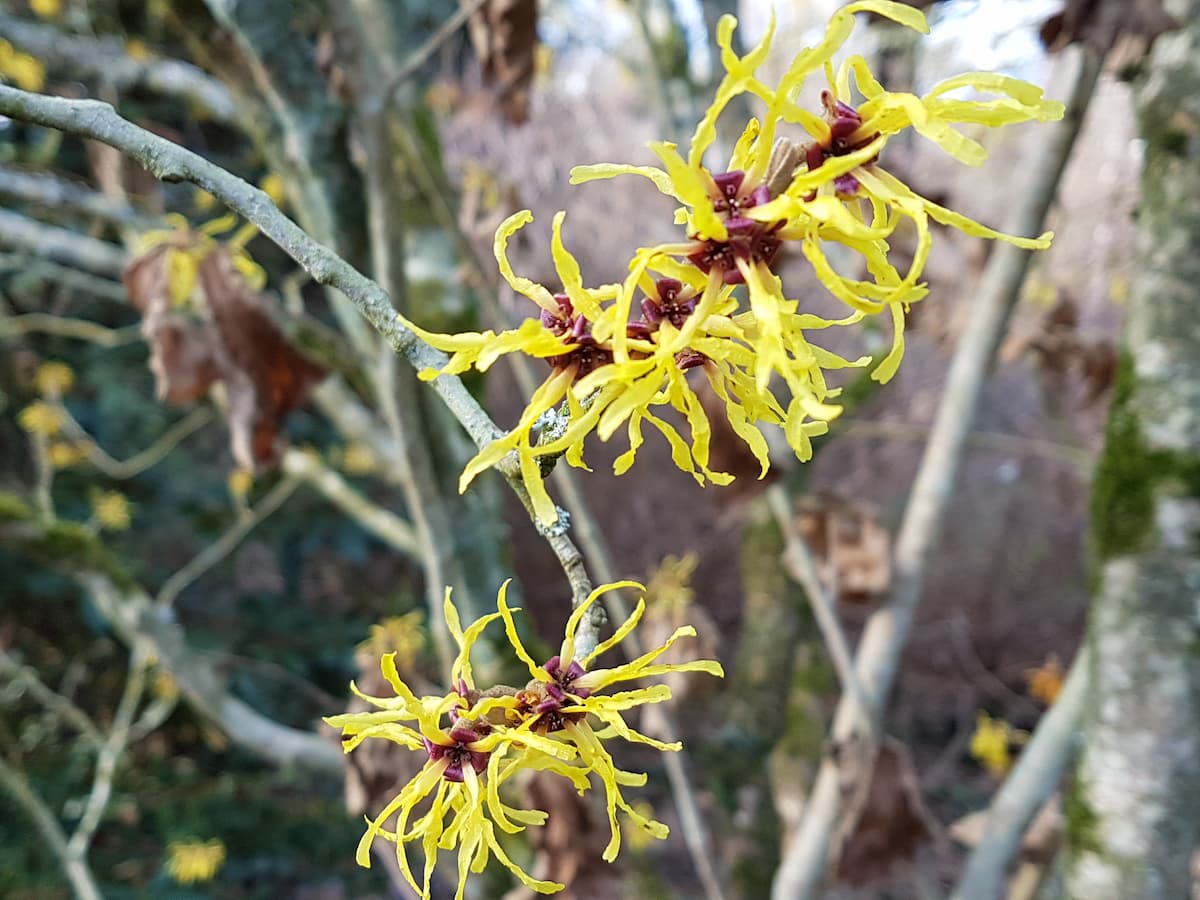
Hamamelis Virginiana blooms in the fall while Hamamelis Vernalis, Mollis, and Japonica bloom in the winter months of January through the end of February. That is one of the main attractions of this beautiful shrub: a display of color and a sunny one at that at a time of the year which is cold and colorless.

The entrance to the Arboretum (above): note the potted Hamamelis specimens, displayed for sale courtesy of the on-site nursery.
Kalmthout arboretum was established on the site of an ancient nursery dating back to the 19th century. By the 1950’s it had fallen on hard times and was about to be sold to a real estate developer.
Brothers George and Robert de Belder, diamond merchants and passionate dendrologists, decided to buy it and save its specimen and rare trees from destruction. A few years later Robert married Jelena, an equally passionate plantswoman and agronomical engineer from Slovenia.
Together they collected and planted seeds from all over the world, growing and selecting new cultivars, not only of Hamamelis but also of Hydrangea, Prunus, Betula and many other shrubs and trees.
Today the collection encompasses more than 6000 specimens and has been the property of the Province of Antwerp since the mid 1980’s.
Very actively managed, with a broad range of activities geared to the general public as well as to specialists, Arboretum Kalmthout is not only a place of beauty but also a center of knowledge and exchange for tree lovers the world over.
Visiting the Kalmthout Arboretum
Kalmthout arboretum is open from 10 AM to 5PM every day.
Closed between December 25 and January 1.
Admission is 10€ pp (as of 2026).
Address: Heuvel 8 2920 Kalmthout Phone: +32 (0)3 666 67 41
E-mail info@arboretumkalmthout.be
Access: within walking distance of the Kalmthout station, 25 minutes from Antwerp by train.
Trains run two to three times every hour.